
Social Work Education Prepares for Advocacy, but Overlooks Policy Engagement.
Written by Amou Mawien, BSW
Recently, I encountered a posting for a child advocate internship at a major international NGO. The position seemed ideal, yet the required majors included public policy, international relations, and sociology—excluding social work. At first glance, one might assume social workers would be well-suited for such roles, given our direct experience with vulnerable populations in refugee and immigration agencies, child protection, and human services. Who could be better equipped to advocate for these populations than those who study and serve them extensively? Social workers, presumably.
However, this exclusion is not unusual. Social work students frequently miss out on high-impact internships focused on social policy. This issue is not solely about external barriers; it also reflects the structure of the social work curriculum and how the profession is represented externally. Social workers are often viewed primarily as direct service providers, with limited recognition of their potential roles beyond therapy and case management.
The NASW Code of Ethics, Section 6, mandates that all social workers participate in social justice efforts. When addressing client needs, we are taught to adopt an ecological perspective, considering the environment, available support systems, and broader context influencing individuals. The resources we recommend—such as SNAP benefits to address food insecurity or daycare assistance to support employment—are all rooted in social policy. These core policies directly shape the interventions we provide.
Case Study: YIM’s Underfunded and Underprotected Research Project
The inaugural Youth In Macro fellowship convened an interdisciplinary team of students specializing in social work, psychology, public health, and policy. The team investigated food insecurity by interviewing grassroots leaders and community members regarding neighborhood food access. While mental health students identified connections between well-being and environmental circumstances, Bronfenbrenner's Ecological Systems Theory enabled a broader analysis that incorporated policy and public health at the macro level.
This interdisciplinary approach integrated immediate ecosystem analysis with a broader macro perspective. To effectively engage policymakers, simply stating that people are hungry is insufficient. Our research demonstrated that communities not only faced hunger but also had limited access to fresh fruits and vegetables, as local stores frequently lacked fresh produce.
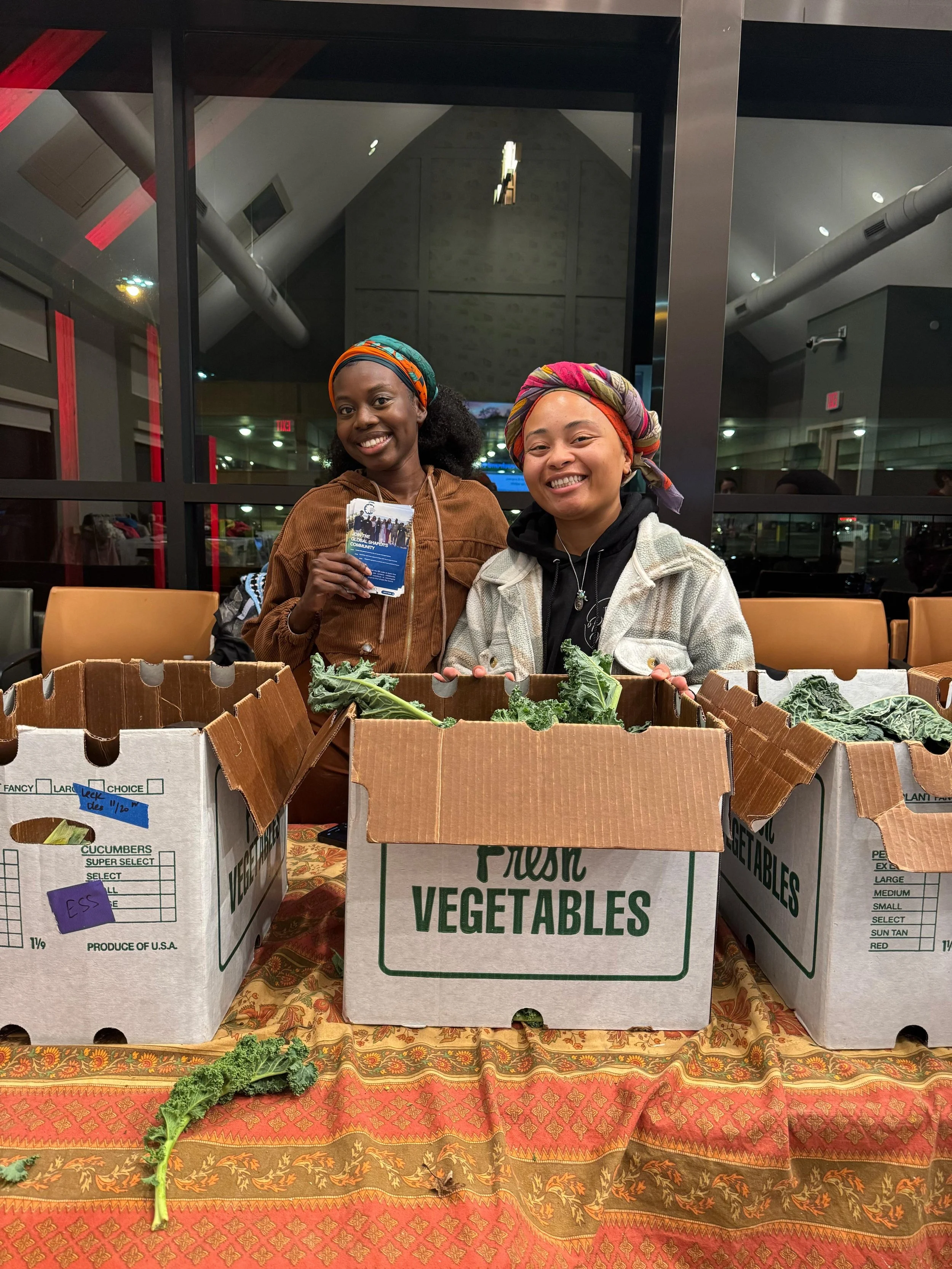
Fresh Produce Giveaway in November
The significance of adopting a macro perspective became apparent during our research, when a federal government shutdown led to the suspension of SNAP benefits. This crisis enabled our team to apply Bronfenbrenner’s Ecological Systems Theory in real time across three domains:
Downstream (Micro/Direct Service): The team partnered with a community organization to distribute groceries, addressing urgent needs that arose from the policy failure.
Midstream (Mezzo/Community Organizing): Residents were connected to a community garden through resource cards, enabling them to become active contributors rather than passive recipients.
Upstream (Macro/Policy): The team addressed structural issues by partnering with Black-owned farms and advocating for city funding to establish permanent Fresh Markets, thereby targeting the root causes of food deserts and zoning barriers.
The research demonstrates that counseling alone cannot address systemic poverty. Practitioners must transition fluidly from individual to community to legislative advocacy to ensure that environments genuinely support clients. Addressing hunger or depression without confronting the policies that enable food deserts merely treats symptoms rather than root causes.
The Gap in the Curriculum
Why are social work curricula not encouraging students to advocate for social policies or participate in their development? Although macro social work specifically addresses these issues, it remains largely neglected in social work education. The rapid growth of Youth In Macro, with over 60 members joining within three weeks of its launch, highlights a widespread recognition of this gap. Students report experiencing moral injury as they are trained to help individuals navigate broken systems rather than repair them. This approach produces a workforce focused on temporary solutions, while students aspire to become system-builders.
Many social work students experience a 'clinical conditioning' loop, where micro-level work is prioritized above all else. Although this work is important, it can foster complacency among those initially passionate about systems-level advocacy. As a result, little progress is made for the populations served, since those with the knowledge and capacity to advocate for change are not doing so.
A comprehensive clinical assessment is incomplete without considering political and structural determinants of health. When the policy landscape dictates a client’s access to nutrition and safety, policy advocacy becomes an essential clinical tool for improving biological and psychological outcomes. Macro social work does not abandon the individual; rather, it extends clinical empathy to a broader scale. Lobbying for protections such as Fresh Markets or SNAP constitutes a therapeutic intervention for entire communities, reducing the need for individual crisis interventions in the future.
Shifting toward this community-centered model requires unlearning the institutional habits of the field. This restrictive pattern originates in social work classrooms, where the curriculum often limit students into localized, underpaid roles designed to simply satisfy administrative demands.
As a result of this narrowed focus, there is a noticeable tendency for students to shy away from policy internships at major organizations. This hesitation is compounded by academic programs that often advise students to wait until their senior year or MSW practicum to pursue practical experience. While some students may secure macro-level internships at that stage, some lack the prior experience necessary to be competitive candidates. Instead of waiting to build portfolios during practicums, students could be developing substantive experience earlier. The field should treat pre-practicum social work education in the sophomore and junior years similarly to pre-med tracks, ensuring students are well-equipped to pursue high-level internships.
This need for broader advocacy inspired the creation of Youth In Macro. The organization trains social work students and emerging professionals in macro-level practice, addressing gaps left by academic programs. Participants learn to translate their skills for macro agencies and to compete for roles and stipends that reflect their expertise. Students should recognize their qualifications and pursue these opportunities proactively.
